
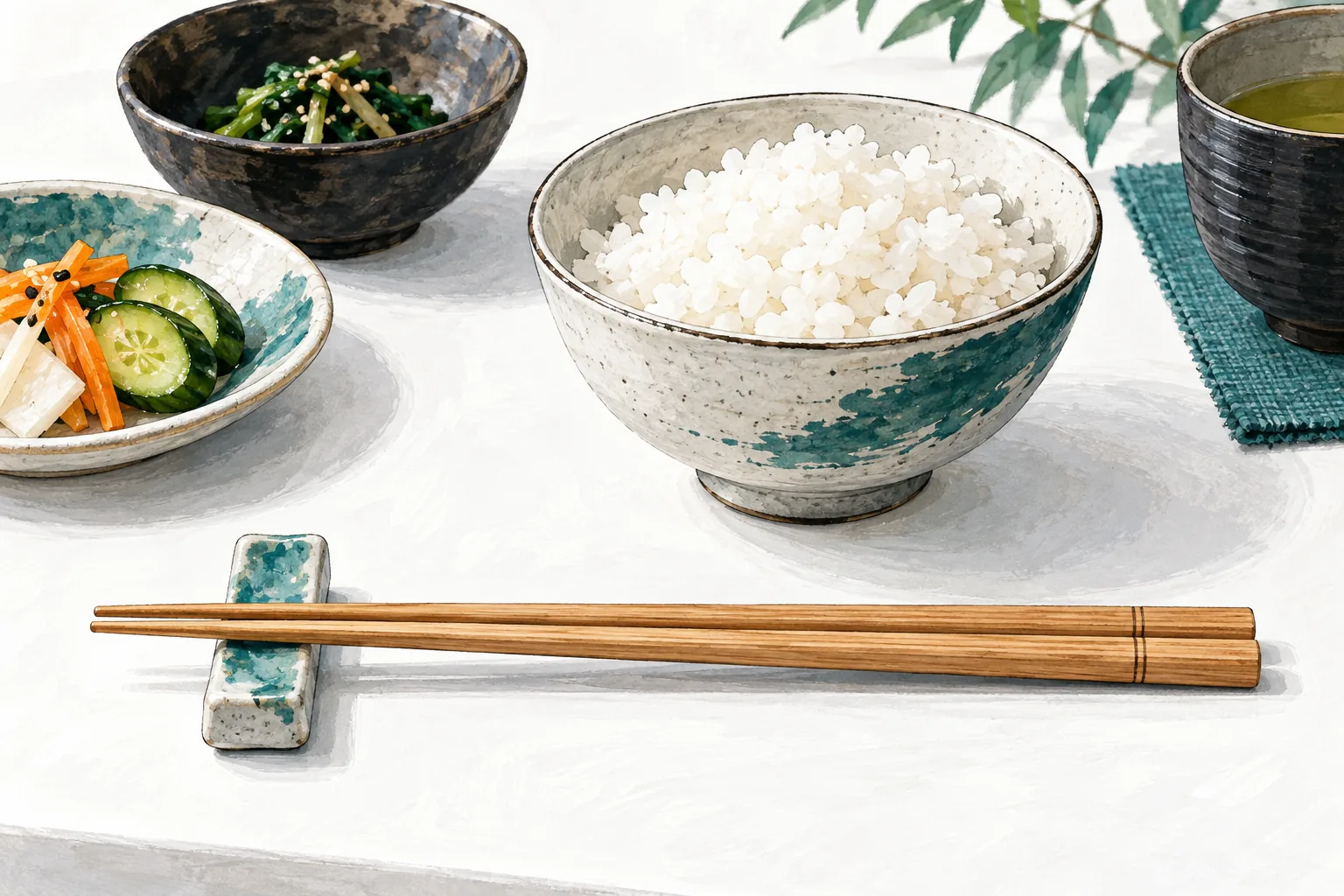
Keep chopsticks out of an upright position in rice, avoid pointing with them, and use the serving utensils provided for shared dishes. Those habits are a useful starting point. Other customs depend on where you are eating: Japanese and Korean table manners, for example, differ over lifting bowls and using a spoon for rice.
This guide separates advice by country so you can follow the setting in front of you. A family dinner, a restaurant meal and a formal occasion may have different expectations.
Chopstick manners to remember at the table
- Put your chopsticks down when you pause to talk. Pointing at someone with them is discouraged in Chinese and Japanese etiquette.
- Take a piece of food without searching through the shared dish for a preferred bite. Avoid hovering from plate to plate while deciding.
- Move a bowl or plate with your hands. Chopsticks are eating utensils, and should not be used to drag tableware across the table.
- Use the serving chopsticks, spoon or tongs supplied for a communal dish. Transfer food to your own plate before eating it.
- Keep the two eating ends aligned and avoid sucking or noisily licking the sticks.
The World Federation of Chinese Catering Industry’s etiquette guide describes pointing, tapping bowls, hovering over dishes and rummaging through food as poor manners. It also notes that many families take a more relaxed approach to dining today.
Why should you avoid standing chopsticks in rice?
In Japan, upright chopsticks in rice recall a funeral offering. Passing food directly between two pairs of chopsticks also has a funeral association. The Embassy of Japan’s food etiquette guide advises against both actions. To give someone food, place it on their plate with a serving utensil instead.
Upright chopsticks are also discouraged in the Chinese catering federation’s guide and in Seoul’s official dining advice. You do not need to remember every explanation to adopt the practical habit: lay chopsticks down neatly when you stop eating.
Chopstick etiquette in China
Avoid tapping your bowl, pointing at people, or picking through a communal dish. Choose the food you intend to take before reaching into the plate. When you need a pause, place the pair neatly on the rest or beside the dish; the Chinese catering federation also describes laying them horizontally on a bowl or plate.
For a shared meal, look for serving utensils before reaching in with your own chopsticks. If the arrangement is unclear, ask the host how people are serving themselves. That question is more useful than assuming that one household’s practice applies everywhere.
Chopstick etiquette in Japan
Use a chopstick rest when one is supplied. Do not spear food, point with the sticks, or pull dishes toward you with them. The Japan National Tourism Organization’s food guide also advises taking food from a communal platter onto your own small plate before eating.
Holding a small bowl closer to your mouth is acceptable in Japanese dining. If you are learning to use chopsticks, keep the lower stick steady and move the upper one with your thumb and fingers. JNTO explains this grip in its food guide. Its customs and manners guidance also says you can ask staff for a different utensil, although a traditional restaurant may not have one available.
Chopstick etiquette in Korea
A Korean place setting commonly includes both a spoon and chopsticks. VisitKorea explains that the spoon has a central role, including for rice and soup. You do not have to force yourself to eat every part of the meal with chopsticks.
The Seoul Tourism Organization’s etiquette page recommends waiting until the eldest diner begins, using a spoon for rice, and returning utensils to their original position after the meal. Korea’s official table manners guidance says not to lift the soup bowl or hold the spoon and chopsticks together in one hand.
The same official Korean guidance corrects a common exaggeration: stabbing food with chopsticks is unusual, but that does not automatically mean the cook will take it as an insult. Avoid turning practical manners into claims about what every diner will find offensive.
Where should chopsticks go when you finish?
Use the rest or return them to the position in which they were set. If neither option is obvious, ask the host or server. In Japan, avoid leaving them stuck in food or handing them to another person with food caught between the tips.
What if you drop food or cannot use chopsticks?
Pause, put the utensils down and ask for help or an alternative. Practising beforehand can make the meal easier, but you do not need to perform a difficult grip through the whole dinner. For shared dishes, ask for a serving spoon rather than improvising with a utensil that has been in your mouth.
Related reading
Learn about Huaiyang cuisine and dishes to try or explore the meals and customs associated with traditional Chinese festivals.
