
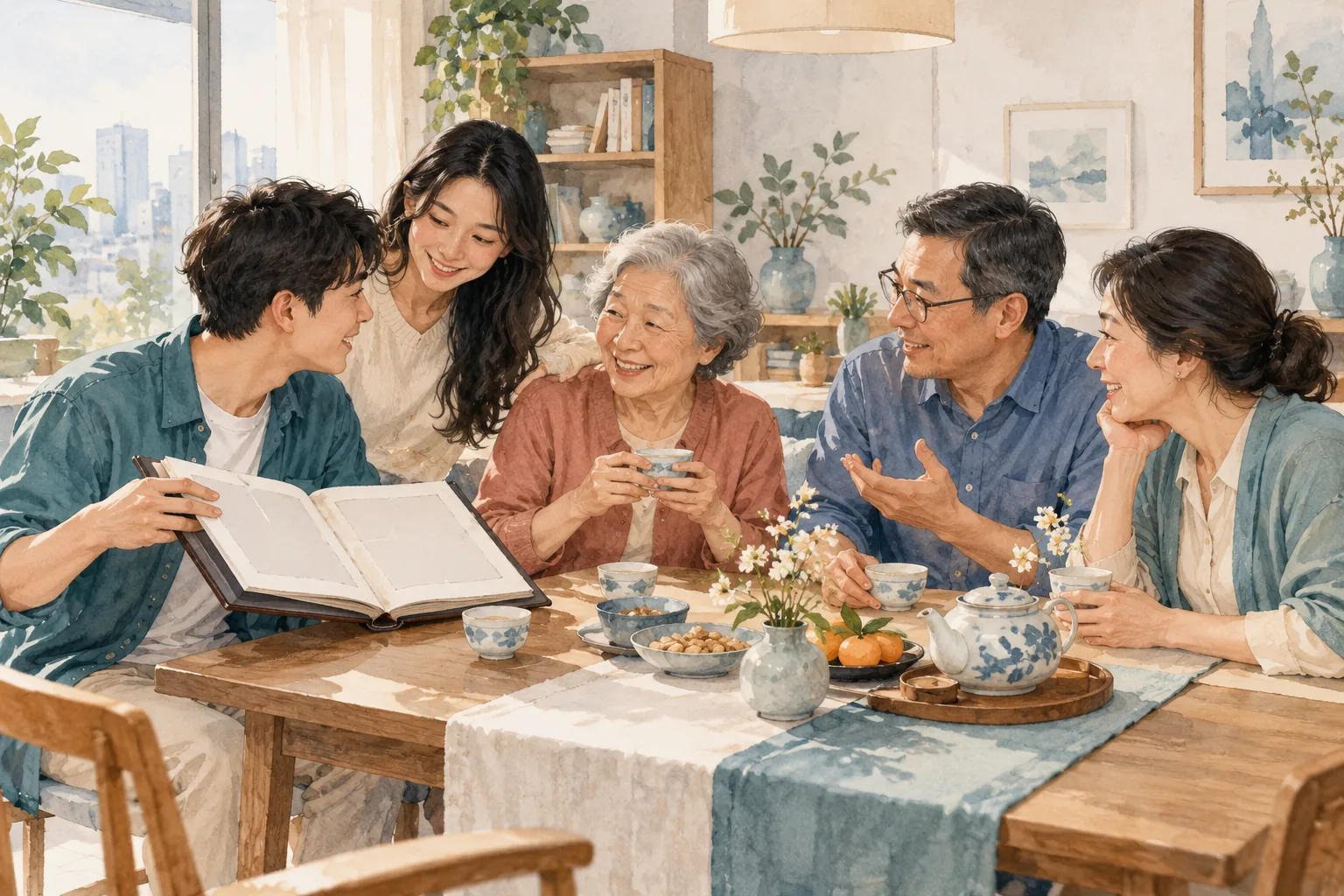
Chinese family culture includes traditions of gathering, care and remembering relatives, alongside the practical choices of individual households. A festival account or historical text can explain an ideal or custom. It cannot tell you who lives together today, how a family makes decisions or which traditions its members follow.
Reunion meals and family traditions
UNESCO’s Spring Festival entry describes families dining together on New Year’s Eve, exchanging greetings and passing on knowledge within families and communities. This gives a concrete example of a festival linking food, visits and skills learned from others.
Ask a host what their household does for the occasion. One person may explain a dish learned from a grandparent; another may talk about travel or scheduling. A family’s own explanation is more useful than asking its members to confirm a national description.
A household is not the same as a whole family
China’s 2020 census communiqué reported an average family-household size of 2.62 people, down from 3.10 in 2010. These figures describe a statistical unit at particular dates. They do not count every relative a person cares for or stays in contact with.
A photograph of several generations together may show a special gathering rather than everyone’s usual living arrangement. When describing it, use the context you know. Ask before publishing names or details about private relationships.
Visiting a family home
- Confirm who is expecting you and whether the invitation includes food.
- Ask how people prefer to be addressed instead of guessing family relationships.
- Let the host explain seating, shoes and serving arrangements.
- Seek permission before photographing children or sharing images from a private gathering.
Avoid personal questions that make someone account for marriage, parenthood or their living situation. There are many other ways to begin a conversation: ask about the meal, a neighbourhood, a hobby or the occasion that brought you together.
Reading history with care
When a book describes a family ideal, check its date, audience and source. An account of an imperial household has a different purpose from a present-day census or someone’s personal story. Our Ming and Qing dynasty guides provide historical context without turning court practices into rules for all families.
More on gatherings and names
Read about Chinese festivals and everyday visiting customs. For a separate Vietnamese topic, our Nguyễn surname guide explains why sharing a family name does not establish a close relationship.
