
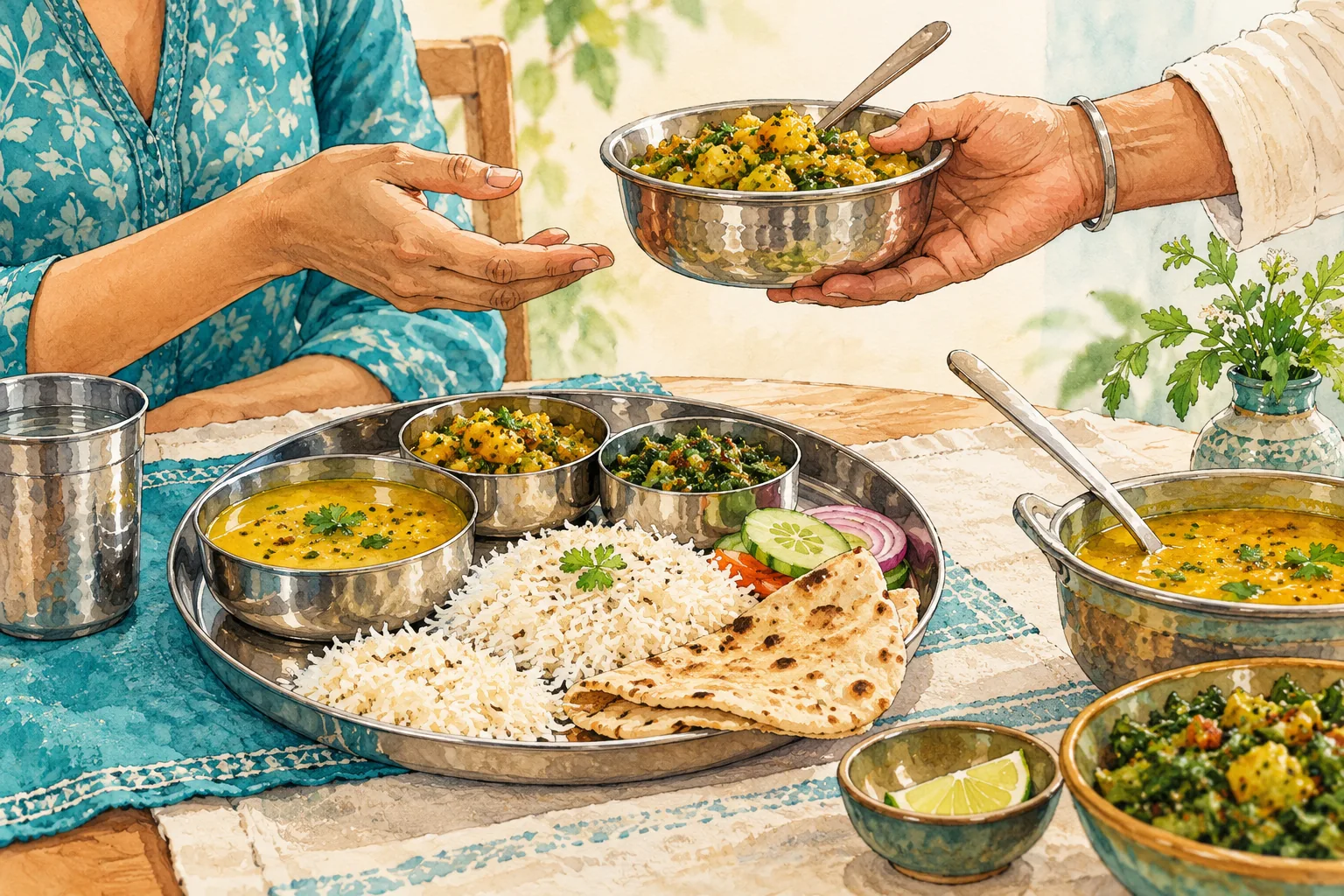
A shared meal in India may be a family invitation, a restaurant order for the table or langar at a Sikh gurdwara. Each setting has its own purpose and expectations. Ask how the meal works when you arrive, especially if you are unfamiliar with the food or the place.
What is langar?
The Sikh Coalition describes langar as food cooked and served by the community at a gurdwara, open to all without discrimination. Sharing the meal expresses equality and communal responsibility. Volunteers prepare and serve it, and those who are able traditionally sit on the ground.
A visitor can ask a volunteer where to leave shoes, how to cover their head and where to sit. If you need a chair or another accommodation, explain that before joining the meal. Follow the gurdwara’s own guidance and keep photography separate from participation unless permission has been given.
Vegetarian does not answer every dietary question
The Sikh Coalition’s gurdwara open-house toolkit notes that vegetarian langar can still contain dairy or gluten. Ask about specific ingredients if you have an allergy or another dietary requirement. A dish name or the absence of meat cannot answer that question on its own.
At a private meal, tell the host about restrictions before the day if you can. Be specific about what you need to avoid and ask whether a suitable option is possible. This gives the cook time to consider the request without being put on the spot at the table.
Serving and sharing
The Delhi Assembly’s etiquette guide includes shared restaurant dishes among its examples of dining customs. Ask which spoon is for serving and whether bread, rice or other accompaniments are shared. Use a serving utensil to move food to your plate when one is provided.
When someone explains eating with the hand, follow their demonstration if you are comfortable. You can also ask for a spoon. Take a manageable portion, taste at your own pace and ask before taking more from a communal container. An invitation to share food does not require sharing a drinking glass or personal cutlery.
Being a considerate guest
- Confirm the time and whether the invitation includes a full meal.
- Ask before bringing food or alcohol, since household preferences differ.
- Thank the people who cooked and served, including volunteers.
- Offer help with clearing up and accept the host’s answer.
More on visiting India
Begin an introduction with our Indian greetings guide, or read the broader introduction to Indian culture. Our dining etiquette guide covers useful questions for unfamiliar meals elsewhere.
