
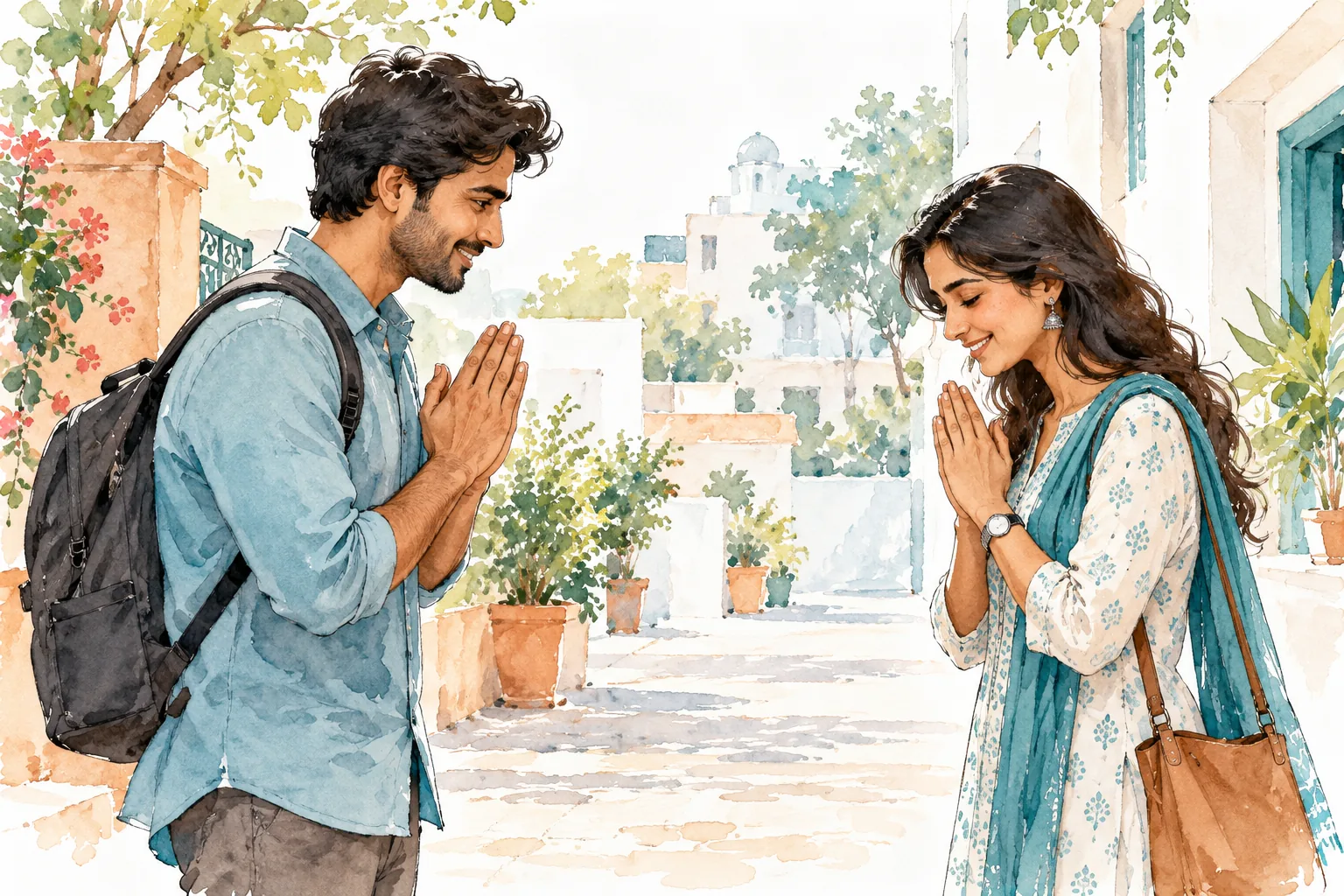
Indian culture varies by region, language, religion and household. A useful introduction helps you ask better questions about the place you are visiting. Begin with a city or region, then look for its food traditions, local languages and cultural institutions instead of expecting one set of customs everywhere.
Language and names
The Government of India’s overview of culture and languages describes a multilingual landscape with many scripts and spoken traditions. For a visit, find out which languages are used at your destination and which one you share with a host or guide. Do not assume that a phrase learned for one region will suit every conversation.
Keep important addresses in their original written form and check how someone prefers to be addressed. Our Indian greetings guide explains namaste, handshakes and introductions. Asking how to pronounce a name is a useful first step when you are unsure.
Food belongs to a setting
Ask about the dish and the occasion. A restaurant menu, a family meal and a community kitchen can call for different questions about serving and participation. The Sikh Coalition’s account of langar, for example, explains a shared meal rooted in equality and community service at a gurdwara.
Read our guide to shared meals and food traditions before joining an unfamiliar meal. Tell a host about dietary requirements early, and ask about ingredients individually when necessary. Learning a regional food name is more useful than assuming that every dish matches an English menu category.
Festivals and living traditions
The Ministry of Culture’s introduction to intangible heritage includes songs, rituals, languages and crafts among living cultural practices. Look for the people and institutions that teach or perform them. A workshop can explain how a craft is made; a museum label can place an object in a particular time and place.
If you want to attend a festival, confirm the local event and whether visitors can participate. Ask before photographing a ceremony. An advertised public performance and a private family observance may have different expectations, even when they share a festival name.
Plan a visit with a specific question
- Choose one local museum, guided walk or cultural venue and check its own visitor information.
- Ask a guide about the region they know, including how practices have changed.
- Allow time to learn how a dish or craft is made instead of collecting names alone.
- Describe your experience with its location and context when sharing it later.
A useful account might describe the meal served in one home and what the host said about it. It should leave room for another family, city or generation to do things differently.
