
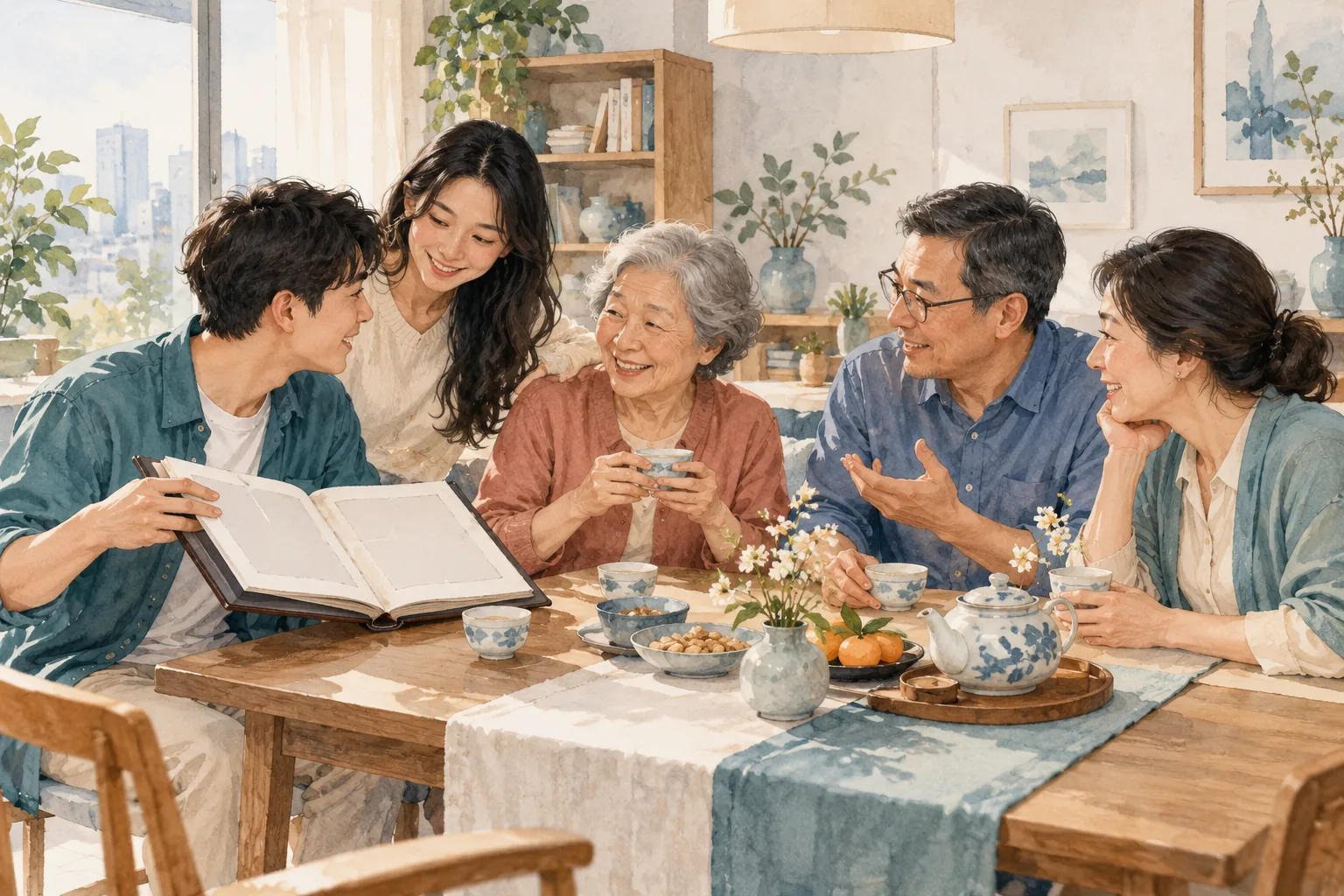
When you are invited to a Chinese home, the most useful information comes from your host. Confirm the time, ask whether the invitation includes a meal and mention any dietary requirements in advance. Household preferences differ, so a short question often helps more than trying to memorize a long list of prohibitions.
Before arriving
Ask whether you should bring anything. If you would like to take food, check what would be welcome and whether it needs preparation. A modest gift should be easy for the host to accept and use. Avoid bringing something expensive that could create an uncomfortable obligation.
At the entrance, pause and ask about shoes. Follow the household’s arrangement, and explain if you need to keep supportive footwear on. The same approach works for seating and where to put a bag: a brief question lets the host show you what is convenient.
Gifts belong to an occasion
A New Year red envelope has a different purpose from a small gift brought to dinner. Our red-envelope guide explains the tradition and the importance of local practice. Ask someone familiar with the occasion before choosing an amount or assuming that every guest is expected to give one.
For festival visits, UNESCO’s Spring Festival account describes greetings and visits among relatives, friends and neighbours. It provides cultural context while leaving the details of a particular visit to the people taking part.
At the table
Wait for the host to show you where to sit and how the food will be served. Use shared serving utensils when provided. If you cannot eat a dish, thank the host and explain briefly. You can decline a second helping clearly without making a judgement about the food.
Our chopstick etiquette guide covers handling chopsticks and shared dishes in more detail. The Huaiyang guide offers a regional example to explore when you want to learn about cooking instead of table rules alone.
Conversation without putting someone on the spot
- Ask about the food, place or event you are sharing.
- Let someone decide how much to say about their family or work.
- Ask permission before posting photographs from a private home.
- Check a misunderstanding quietly when it does not need an immediate public correction.
If you make a mistake, acknowledge it briefly and follow the explanation you are given. Our saving face guide offers examples of respectful disagreement and clear requests.
A broader introduction
Explore Chinese food, festivals and history, or read about family traditions and changing households. Treat each visit as one household’s experience rather than evidence of a single national routine.
