
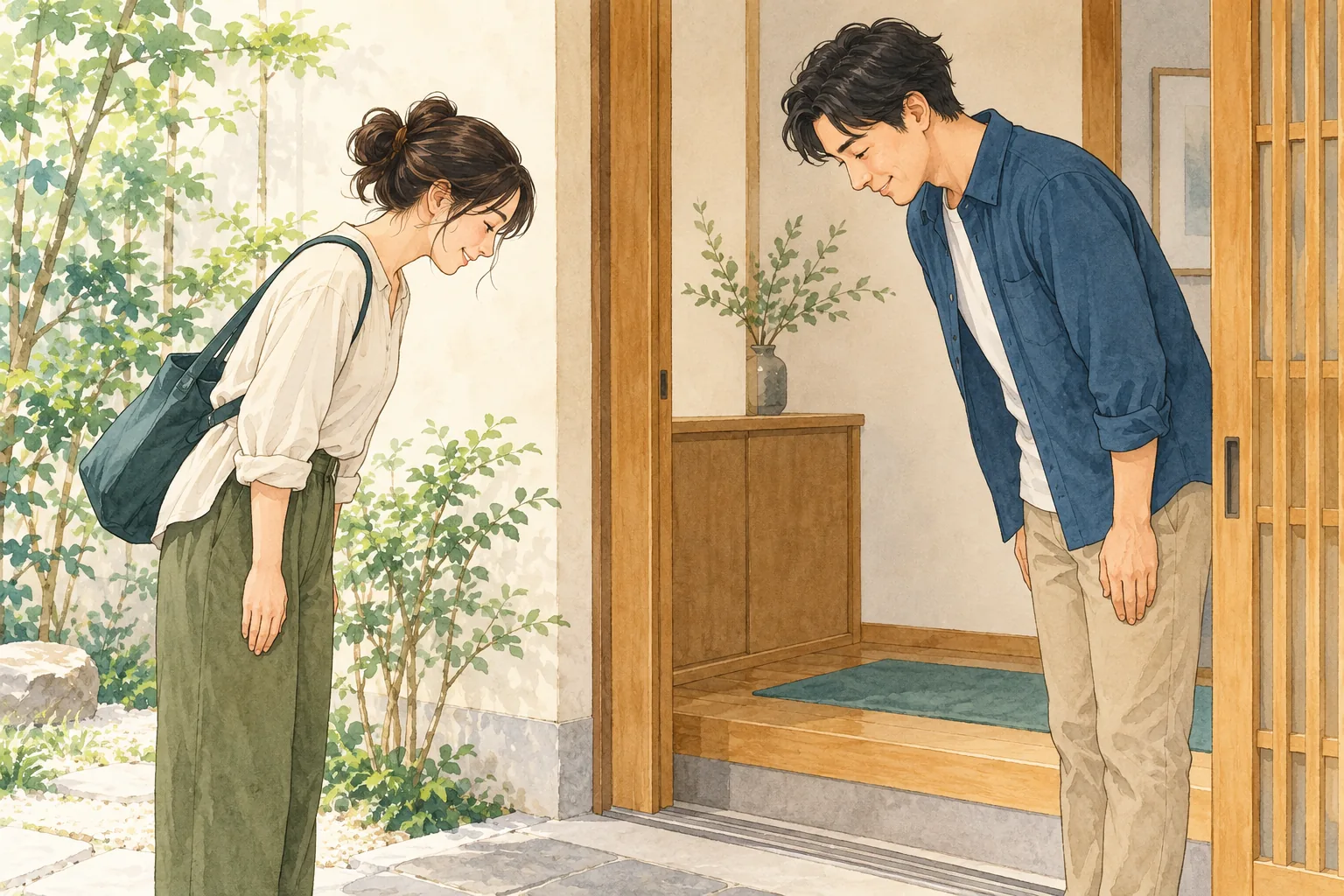
A small bow and a spoken greeting are useful starting points when meeting someone in Japan. Keep the movement relaxed and pay attention to the situation. A visitor does not need to turn an ordinary introduction into an elaborate ceremony.
Common greeting phrases
- Ohayō gozaimasu is a polite morning greeting.
- Konnichiwa is a daytime greeting.
- Konbanwa is used in the evening.
- Arigatō gozaimasu expresses polite thanks.
The Japan Foundation’s Irodori starter lesson introduces greetings in everyday situations and gives examples to listen to. Use the recordings to learn pronunciation. Romanized spellings are helpful reminders, but hearing a phrase gives you more than an English approximation can.
How much should you bow?
The Irodori lesson distinguishes a small nod from a fuller bow and explains bowing from the waist. For an ordinary greeting, a brief, modest movement is a reasonable beginning. Keep your hands relaxed and follow the other person’s level of formality.
Pressing your palms together is not the usual Japanese greeting gesture. If you are trying to greet someone, a small bow and a spoken hello keep the action clear. The Japan Foundation’s examples are a better model to practise than a dramatic bow copied from a performance.
Handshakes and personal space
The Japan National Tourism Organization’s manners guide discusses bowing and the relatively limited role of physical contact in many introductions. Wait to see whether a handshake is offered. Avoid initiating a hug with someone you have just met.
Personal preference still matters. If someone greets you in English or offers a handshake, respond to that person and that setting. Courtesy does not require forcing an encounter to match a guidebook example.
Introductions and small mistakes
Say your name clearly and pause so the other person can introduce themselves. Ask how to pronounce an unfamiliar name and which form of address they prefer. A quiet correction gives you a chance to try again.
If you miss a greeting or use the wrong word, acknowledge it briefly and continue. You can say that you are learning. Asking someone to repeat a phrase is usually more useful than guessing repeatedly while the conversation waits.
Where to learn more
The Japan Foundation’s beginner material offers listening practice and everyday dialogues. For meals, read our chopstick etiquette guide and shared-meal questions. Compare a different setting in Indian greetings and introductions.
