
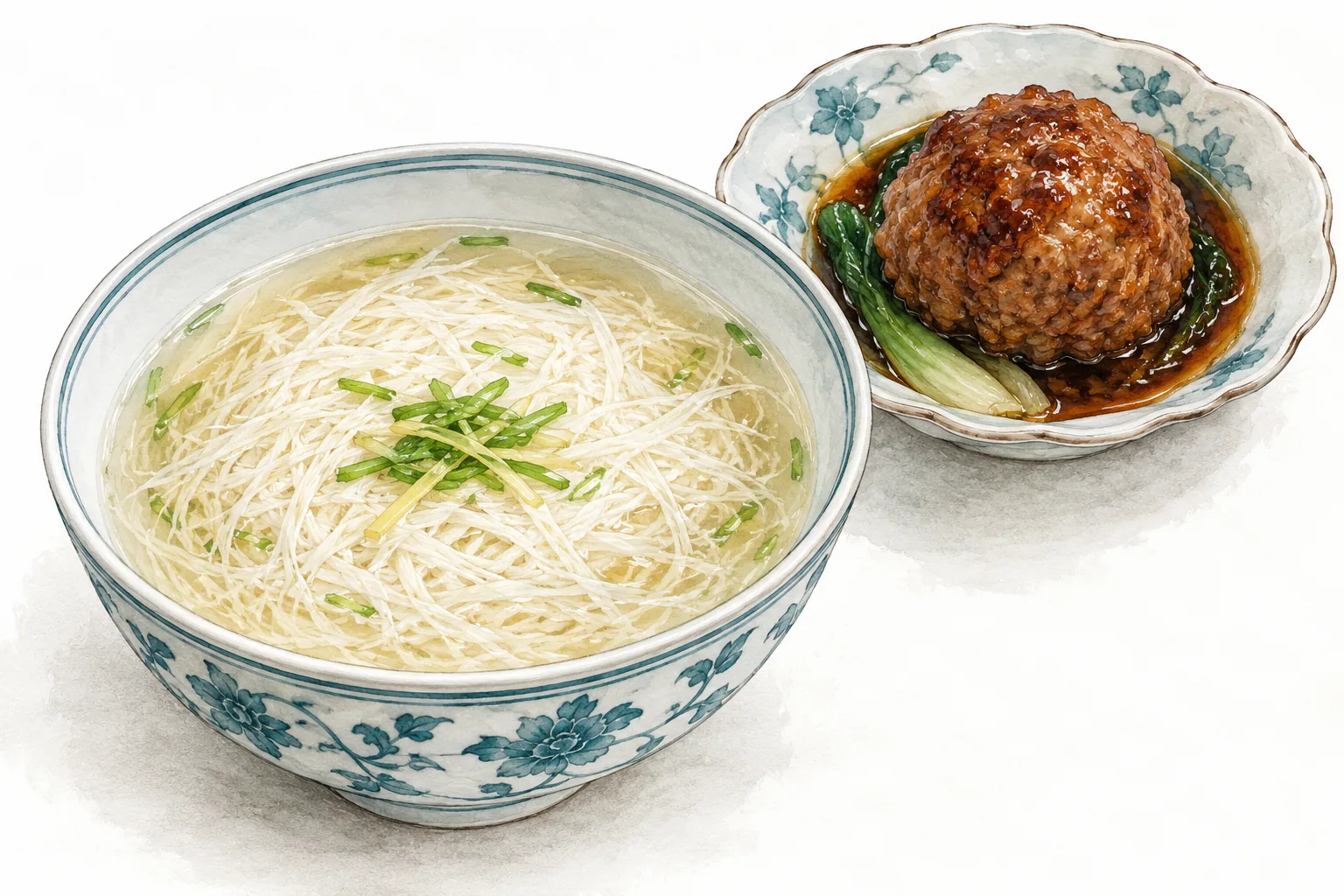
Huaiyang cuisine is a Chinese cooking tradition closely associated with Huai’an and Yangzhou in Jiangsu province. Fine cutting, controlled cooking and an interest in texture are part of its appeal. A bowl of tofu cut into thin strands can tell you as much about the style as a large banquet dish.
Huaiyang is often discussed within the wider family of Jiangsu cuisine. Beijing’s official regional cuisine guide identifies Huaiyang as one of Jiangsu’s regional styles and describes the province’s cooking in terms of mild flavors, tender textures and delicate techniques.
Where does Huaiyang cuisine come from?
Huai’an and Yangzhou both maintain the tradition. Their joint promotion of Huaiyang food is documented in Yangzhou’s 2024 report to UNESCO’s Creative Cities Network. Treating the cuisine as the property of only one city misses that shared regional identity.
Yangzhou became a UNESCO Creative City of Gastronomy in 2019, according to its 2023 monitoring report. That is a designation for the city and its food culture. It does not mean every restaurant carrying a Huaiyang label has UNESCO approval.
What makes Huaiyang food distinctive?
A Shanghai government travel feature describes Huaiyang cooking through its fine knife work and delicate flavors. The point is easier to understand through a dish: evenly cut strands or small pieces need consistent preparation before they ever reach the pot. Read the feature on Yangzhou’s food culture.
When comparing dishes, pay attention to the texture as well as the seasoning. Ask whether something is braised, steamed or served in broth. These questions help you order a varied meal instead of choosing several dishes that turn out to be similar.
A description such as “mild” is not a dietary guarantee. Ask about the actual ingredients, stock, sauces and cooking oil if you have a restriction. A vegetable or tofu dish can still contain meat or seafood.
Huaiyang dishes to look for
The Jiangsu culture and tourism food directory lists the following Yangzhou dishes and food traditions. English translations vary, so keeping the Chinese name beside an order can help.
- Yangzhou fried rice (扬州炒饭): a familiar entry point if you want a rice dish. Check the restaurant’s version rather than assuming the ingredients from the name.
- Lion’s head (狮子头): a meatball dish. The Jiangsu directory includes a crab version, so ask which preparation is being served.
- Da zhu gan si (大煮干丝): the directory describes a dish of shredded chicken, ham and dried tofu. It should not be confused with a vegetarian tofu dish.
- Wensi tofu (文思豆腐): associated with very fine tofu cutting. It is a useful dish to ask about when you want to understand the cuisine’s knife work.
- Three-ding steamed buns (三丁包子) and emerald shaomai (翡翠烧麦): local snacks listed alongside Yangzhou’s morning tea tradition.
Why is Wensi tofu often mentioned?
Wensi tofu demonstrates how cutting changes the way an ingredient feels in a dish. A Shanghai government feature on tofu describes soft tofu sliced into strands almost as fine as hair for soup. The example in that article includes abalone, another reason to check the preparation before ordering.
You do not need to judge a chef’s skill to enjoy the dish. Notice whether the tofu remains distinct in the broth and how its texture differs from a cube of tofu. That comparison makes the technique easier to appreciate.
How to order a first Huaiyang meal
- Tell the server how many people are eating and ask which dishes are intended for sharing.
- Choose one dish that interests you for its texture, then ask for a contrasting vegetable dish and a suitable staple.
- Ask whether a named specialty comes in several versions. A menu translation can leave out a stock or garnish.
- Explain restrictions using specific ingredients. “No pork” is clearer than asking for something “light.”
- Check portion sizes before adding rice, buns and several main dishes to the same order.
These are ordering suggestions, not a fixed traditional menu. Let the restaurant’s available dishes and your group’s appetite guide the meal.
Is Huaiyang cuisine the same as all Jiangsu food?
No. The official Beijing guide distinguishes Huaiyang from Jinling, Suxi and Xuhai within Jiangsu cuisine. Regional labels are useful when reading a menu, but a restaurant may serve dishes from more than one tradition. Ask what its kitchen specializes in.
Related reading
Before a shared meal, read our guide to chopstick etiquette. For the cultural setting of reunion meals, see Chinese festivals and their customs.
