
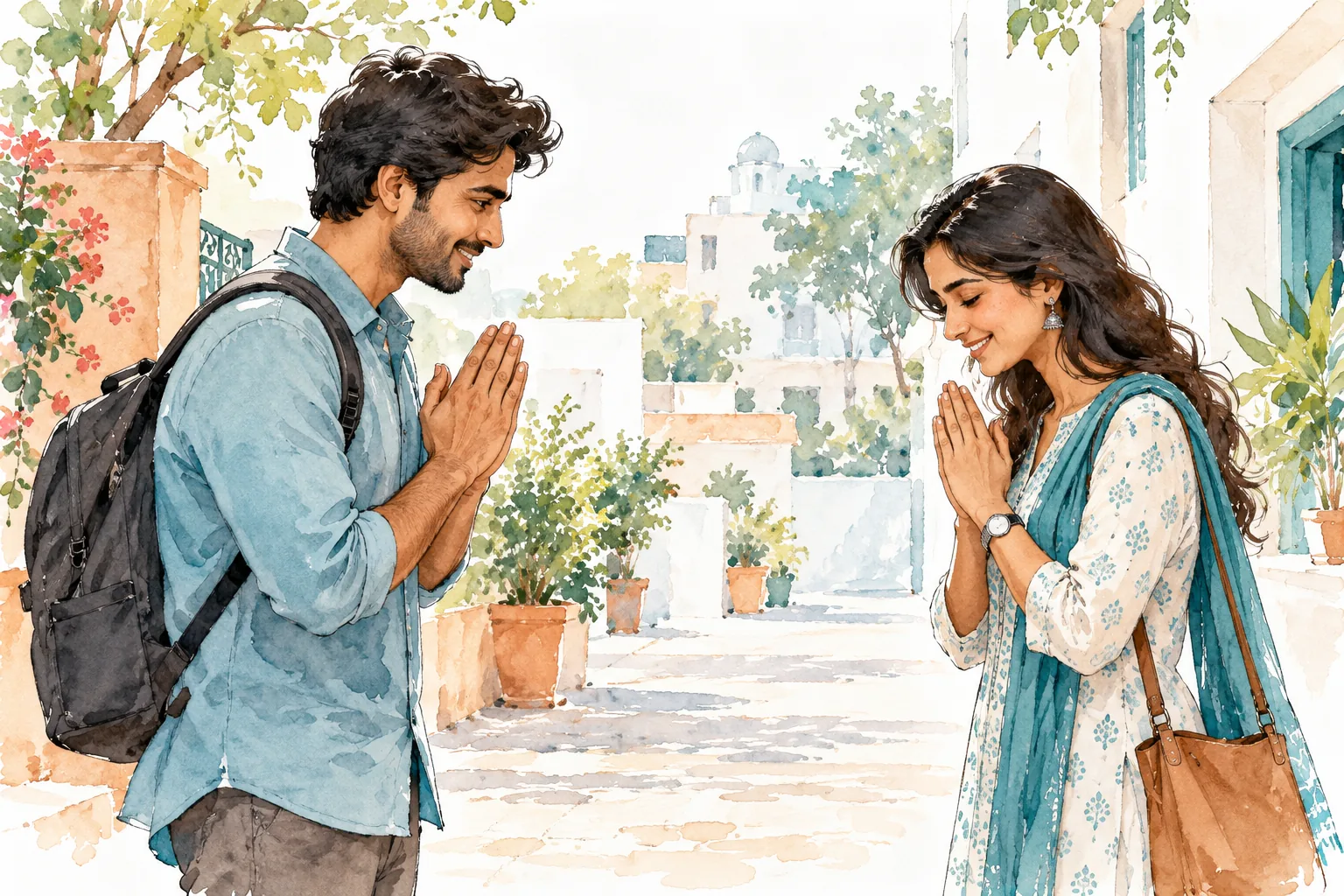
Namaste is a respectful greeting you may hear in India, often accompanied by joined palms and a slight inclination of the head. It is useful to recognize, but India has many languages and religious communities. A friendly hello and an introduction can be a sensible beginning when you do not know which greeting someone prefers.
How to use namaste
Bring your palms together lightly in front of your chest, keep your posture relaxed and say namaste. Avoid turning a brief greeting into a performance. The Embassy of India’s visitor guidance describes the gesture as a polite way to greet someone and advises visitors to let the other person initiate a handshake.
You do not need to copy every gesture you see. If you are carrying bags or cannot comfortably join your hands, a verbal greeting and a courteous expression are enough to begin a conversation. A person’s response gives you a better guide than a rule applied to everyone.
Should you shake hands?
The Delhi Legislative Assembly’s social etiquette guide includes handshakes in urban introductions and recognizes English greetings as an option. Treat these as examples of settings you may encounter. In an unfamiliar situation, pause briefly and follow the other person’s lead about physical contact.
If someone offers a handshake and you prefer a greeting without contact, acknowledge the offer warmly and say hello. Likewise, do not insist on a handshake or a hug when the other person keeps some distance. Courtesy depends on both people being comfortable.
Names and forms of address
Naming practices differ across regions and families. Ask “What would you like me to call you?” if the appropriate name or title is unclear. Repeat an unfamiliar name carefully and accept a correction. A name on a booking, badge or message may not tell you which part the person uses in conversation.
A first meeting, step by step
- Start with a simple greeting and introduce yourself.
- Use the language you share; ask for help with a local phrase if you would like to learn it.
- Leave room for the other person to choose whether to shake hands.
- Check pronunciation or preferred address without making the person explain their whole background.
For example, “Hello, I’m Maya. It’s nice to meet you. Have I pronounced your name correctly?” makes the purpose of the introduction clear and gives the other person an easy opportunity to respond.
Related cultural guides
Read our introduction to Indian culture for visitors and the guide to shared meals and food traditions. For a different greeting convention, compare greetings in Japan.
