
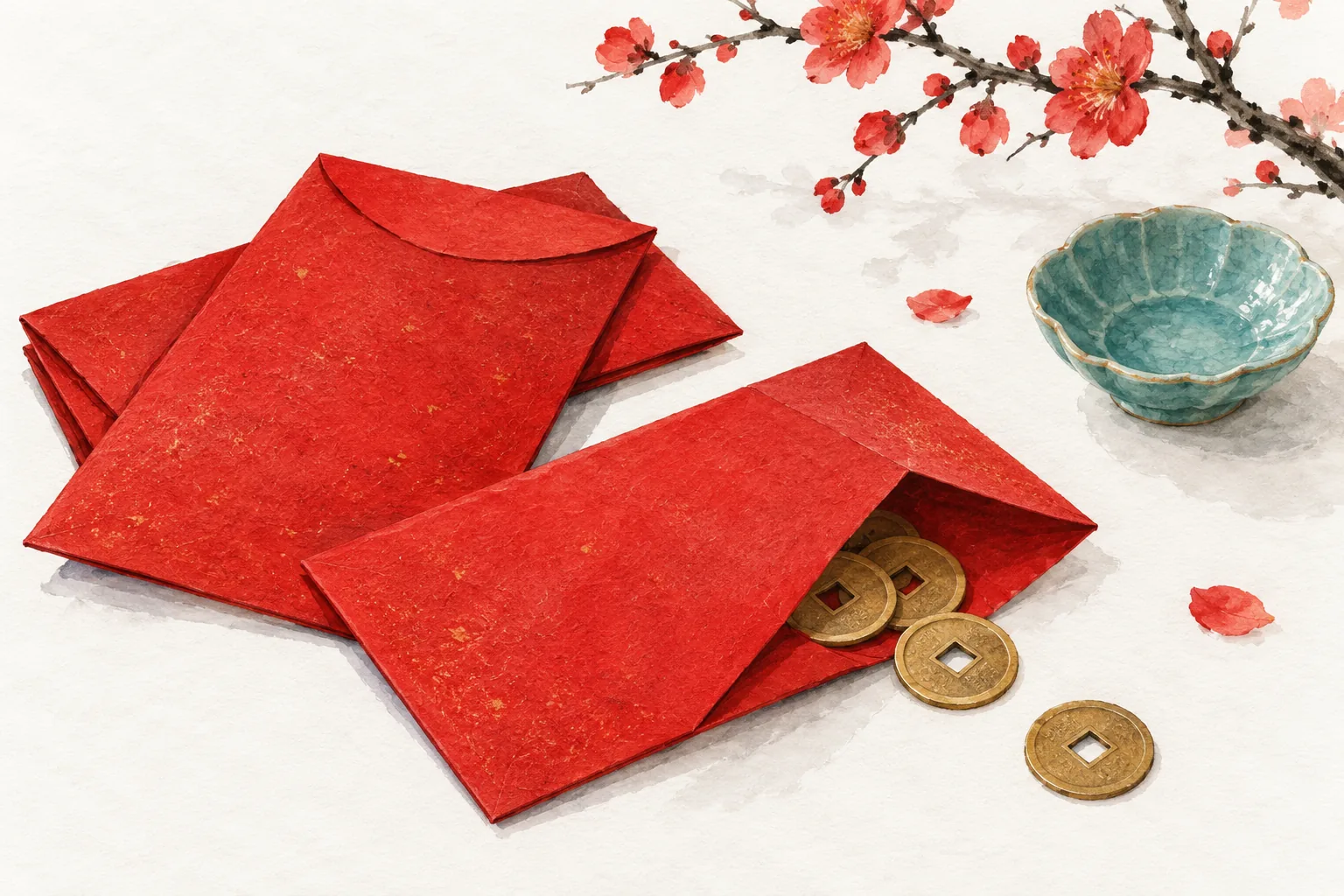
Chinese New Year red envelopes are gifts of money presented with good wishes. They are called hóngbāo in Mandarin and lai see in Cantonese; angbao or ang pow are familiar names in Singapore’s Hokkien context. The occasion, relationship and local custom shape who gives them and how.
What does a red envelope mean?
The Sun Yat Sen Nanyang Memorial Hall’s account of red packets describes them as blessings passed from giver to receiver. It also places them beyond New Year: red packets can mark weddings, birthdays, childbirth and other important occasions. The envelope is therefore part of a wider practice of giving good wishes.
The legend of Sui
One popular story tells of Sui, a demon that frightened or harmed children on New Year’s Eve. In a retelling recorded by the memorial hall, parents give their child eight copper coins wrapped in red paper. The coins shine when Sui approaches, frightening it away. Other families repeat the practice to protect their children.
Singapore’s SG101 heritage account tells a variation in which the Eight Immortals disguise themselves as the coins. These are stories explaining the protective meaning of the custom. They do not establish one documented moment when every red-envelope tradition began.
The name yāsuìqián is connected with suppressing Sui in the legend. The memorial hall also explains the association with a similar-sounding word for age, linking the gift to wishes for a child’s well-being as another year begins.
Who gives red envelopes at Chinese New Year?
In Hong Kong, the Hong Kong Tourism Board describes lai see given by elders, married people and employers. Beijing’s official tourism guide to red envelopes also notes that earning adults may give them to older relatives as an expression of respect.
These examples explain why “only adults give to children” is too narrow as a universal rule. If you are visiting a family, ask your host what is usual in that household. A workplace exchange may follow different expectations from a reunion dinner.
How should you receive a red envelope?
Thank the giver and keep the focus on the greeting. Hong Kong Talent Engage’s New Year etiquette guide advises against opening lai see immediately in front of the person who gave it. For a visitor in that setting, putting it away and opening it later is a useful habit.
How much money should you put inside?
There is no single amount that fits every country, family and relationship. Ask a trusted local host privately, give within your means and check the currency before preparing the envelopes. A list of amounts from one city can easily be misleading when applied elsewhere.
- Prepare envelopes before the visit so you can greet people without sorting cash at the table.
- If you need different amounts, organize them in a way you can recognize discreetly.
- Avoid comparing gifts in front of other recipients.
- If you receive an unfamiliar custom or greeting, follow your host’s explanation rather than treating an online checklist as a rule for the whole family.
Red packets as designed objects
Red packets can also carry contemporary artwork. Singapore’s National Heritage Board runs a Museum Roundtable hongbao campaign featuring designs from participating museums and heritage institutions. A decorative packet can be an object to keep even after the money is removed.
Related reading
Place the custom in context with our Chinese festivals guide. For a Vietnamese moon legend associated with another festival season, read Cuội and the banyan tree.
