
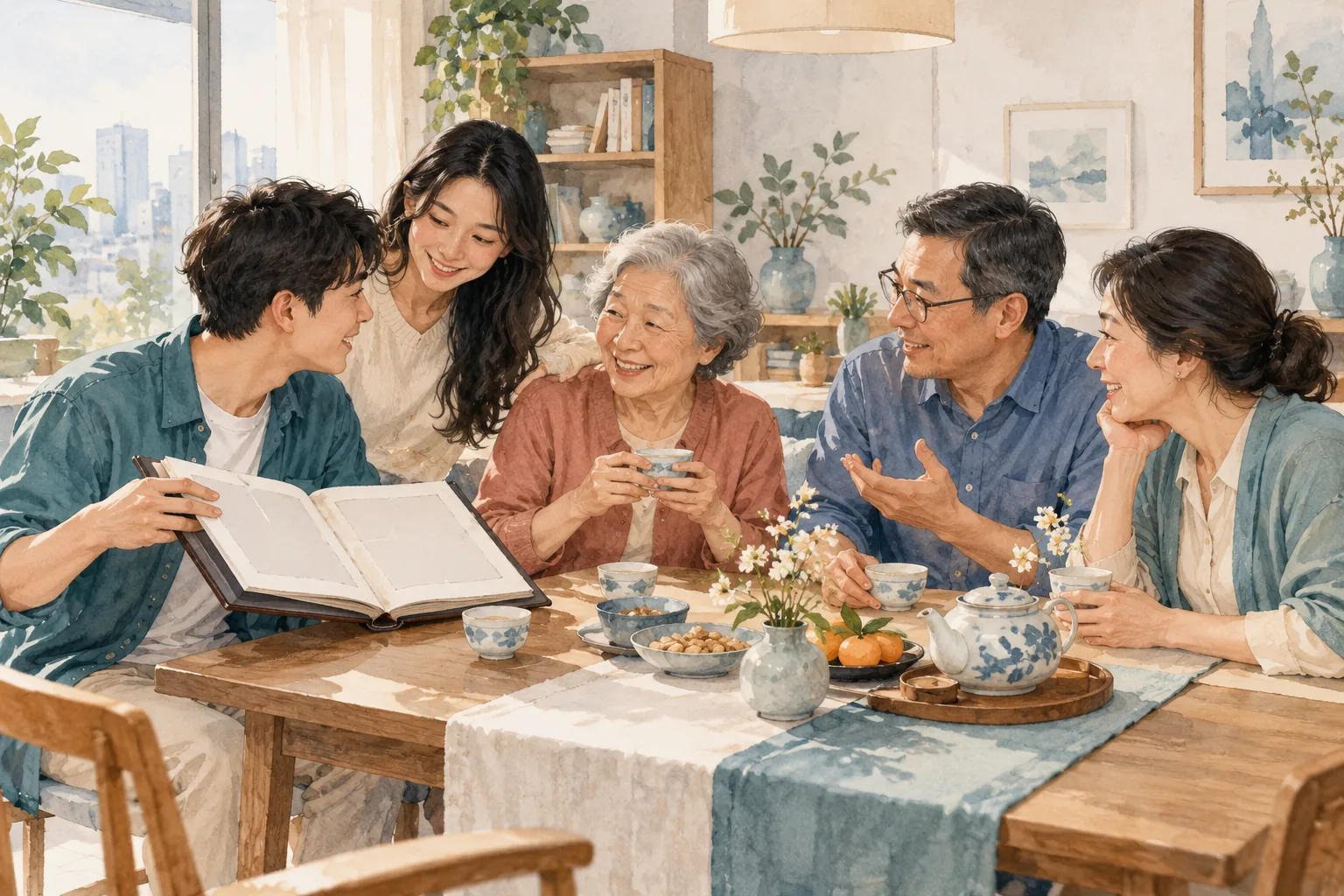
Chinese culture is easier to understand through particular places and practices than through a list of national traits. A meal in Yangzhou, a New Year gathering and a visit to an imperial palace raise different questions. Start with what you want to understand, then follow the local and historical context.
Food begins with a region
A regional cuisine gives you a manageable starting point. Our Huaiyang cuisine guide introduces dishes and cooking traditions associated with the lower Yangtze region. Use a menu as a prompt to ask about ingredients, preparation and how dishes are shared. A familiar English dish name may cover several versions.
At a shared meal, watch how serving utensils are used and ask before reaching into a communal dish. Our chopstick etiquette guide separates Chinese, Japanese and Korean settings so that advice from one place is not applied indiscriminately elsewhere.
Festivals connect homes and public life
UNESCO’s Spring Festival entry describes preparations, reunion meals and greetings to relatives and neighbours. The listing shows how one festival combines household customs, community activities and skills passed between generations. Participation still differs from family to family.
Check the name of an event and its calendar before making plans. Our Chinese festivals guide distinguishes New Year, Lantern Festival, Dragon Boat Festival and Mid-Autumn Festival. The separate red-envelope article explains one gift tradition in more detail.
Read historical sites with dates in mind
The UNESCO listing for the imperial palaces in Beijing and Shenyang provides a starting point for palace history. Our introductions to the Ming and Qing dynasties help place buildings and objects in their period. A dynasty name on a label identifies a historical context; it does not explain all of modern life. For the history of an instrument, read about the magnetic compass’s Chinese origins and use at sea.
Questions that lead to better conversations
- Where is this food, craft or performance from?
- Is this an everyday practice or part of a special occasion?
- Who taught you how to make or do it?
- Does your family do it in the same way?
These questions let someone describe their own experience. Leave room for a person who does not follow a tradition, or who would rather talk about work, music or an ordinary day.
Everyday customs
For practical situations, continue with visiting homes, giving gifts and conversation. Read people and regional diversity for guidance on describing the people you meet without broad stereotypes.
